4 Days North Tanzania Safari

4 Days North Tanzania Safari

These safari package are great for this short period of time. One day of which you will spend in the Lake Manyara National Park, two days in the Serengeti. Serengeti Park is considered by right to be a treasure of the world’s wildlife and last day in the Ngorongoro Crater.

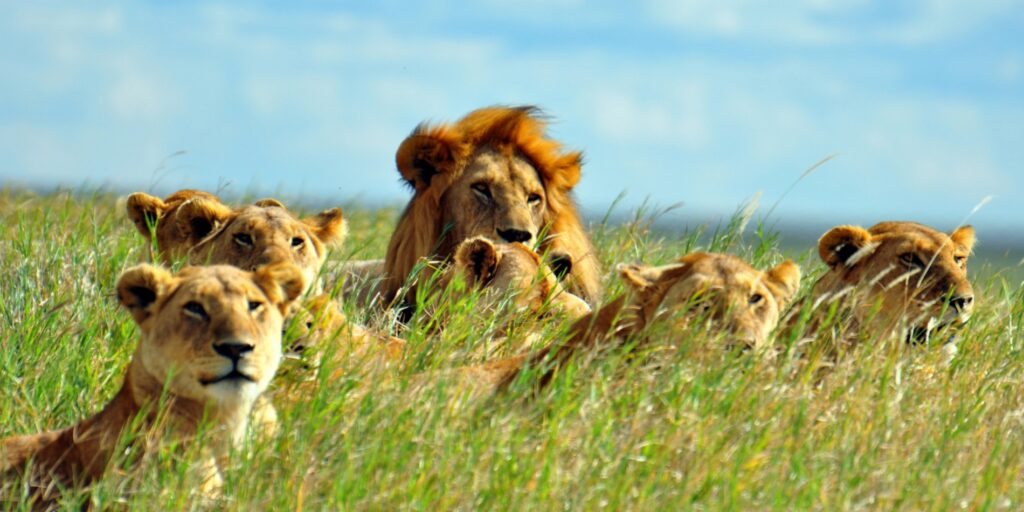
The unique climatic conditions allow you to enjoy the incredible scenery, you’ll be able to see resting lions, sneaking the secretive leopard, graceful antelopes. The advantage of such itineraries is that they give more chances to see the rare representatives of the African fauna, pythons, gemsboks, elands, servals, caracals, secretary birds, crocodiles, black rhinos and many others.

Safari Price Are Categorized In Three Different Ways:

4 DAY TRIP
1 Person
2-4 Persons
5-7 Persons
8-10 Persons
LAKE MANYARA TO SERENGETI TO NGORONGORO CRATER
$1,270
$1,150
$1,070
$970
4 DAY TRIP
1 Person
2-4 Persons
5-7 Persons
8-10 Persons
TARANGIRE TO SERENGETI TO NGORONGORO CRATER
$1,700
$1,600
$1,480
$1,380
4 DAY TRIP
1 Person
2-4 Persons
5-7 Persons
8-10 Persons
TARANGIRE TO SERENGETI TO NGORONGORO CRATER
$2,000
$1,920
$1,780
$1,700

Day 1: Moshi – Lake Manyara National Park

After breakfast you will be picked up Moshi by our professional safari guide and driver, then explain a short briefing info about safari. From there you will be driven through west to the Great Rift Valley and the Lake Manyara National Park.

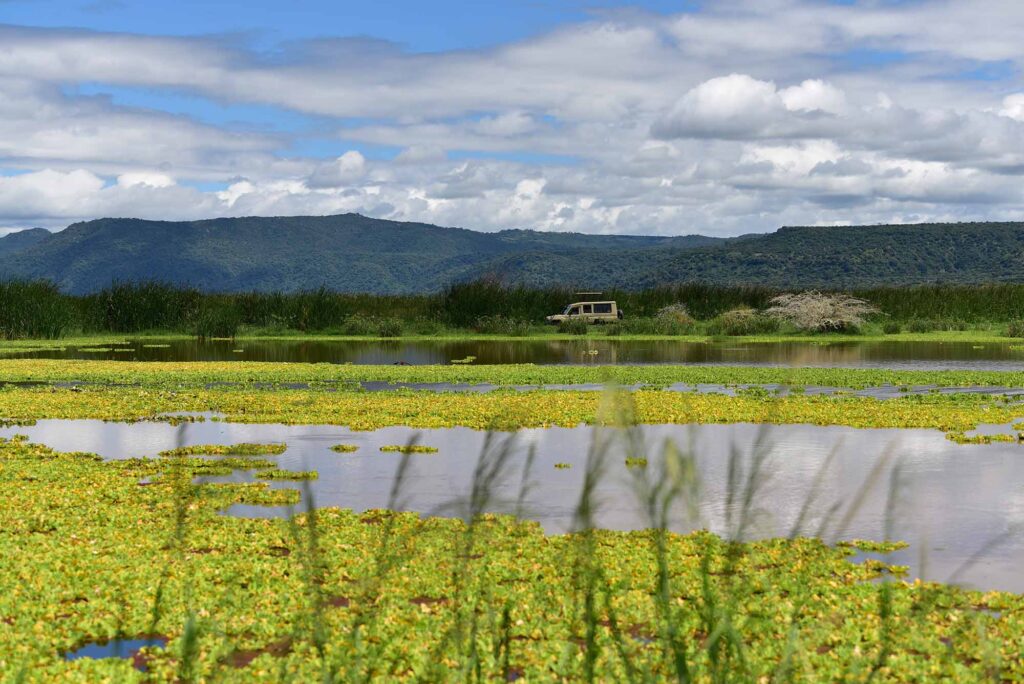
The Lake Manyara National Park is one of Tanzania’s most dramatically located African wildlife areas, consisting of a massive but shallow soda lake (covering two-thirds of the park) at the foot of the Great Rift Valley’s western escarpment.

The park’s varied habitat attracts a wide variety of animals, including

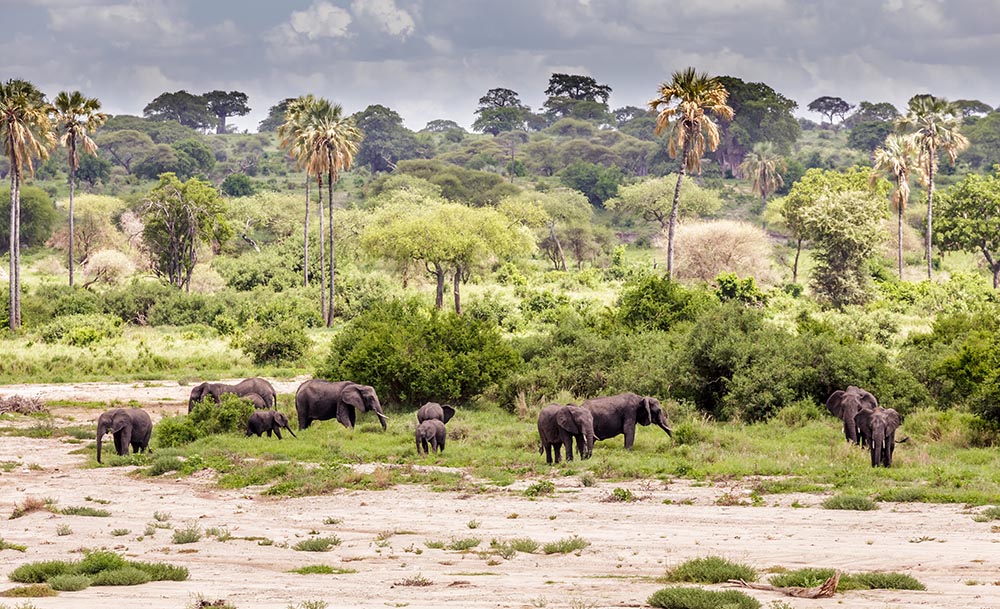
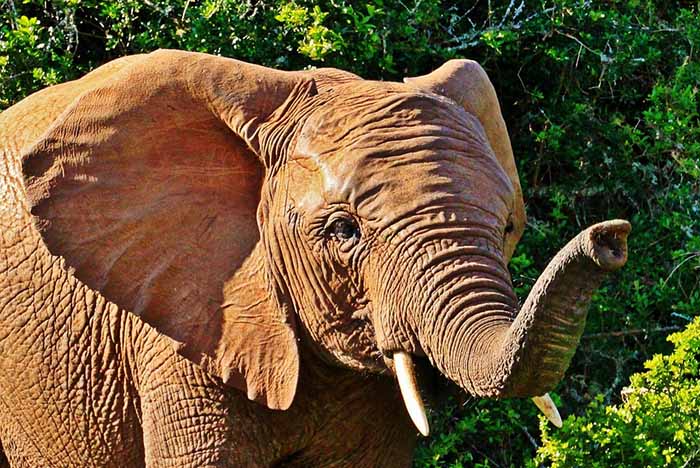
  • One of Africa’s densely populated African elephants herds, Lake Manyara’s famous tree-climbing lions,
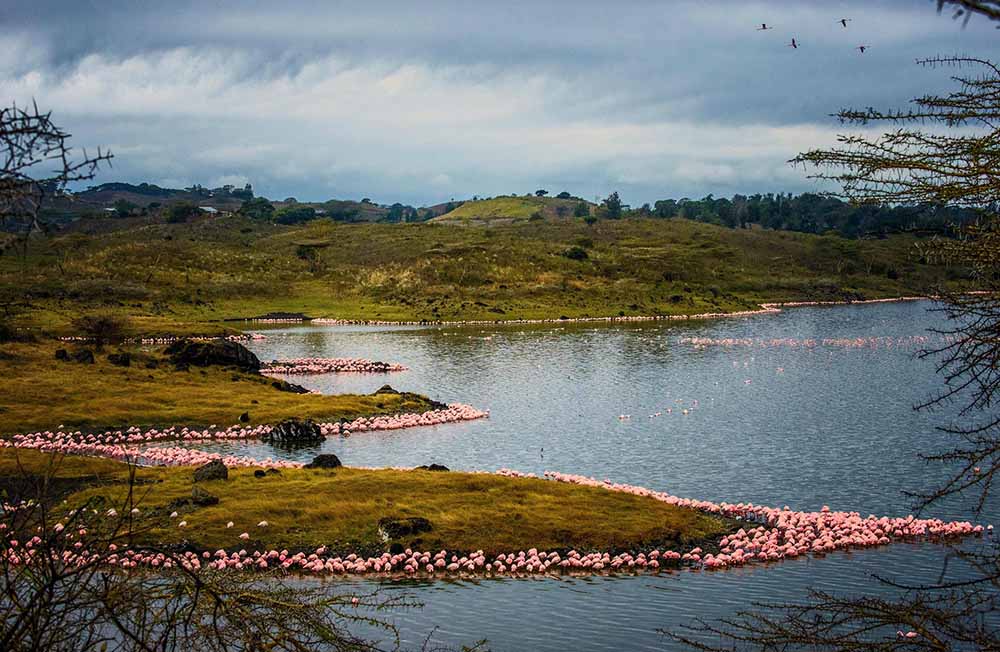
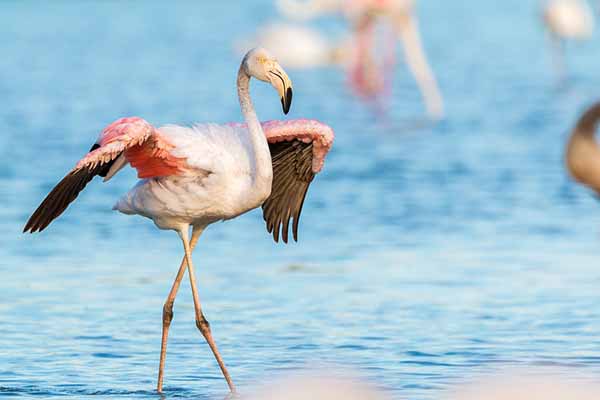
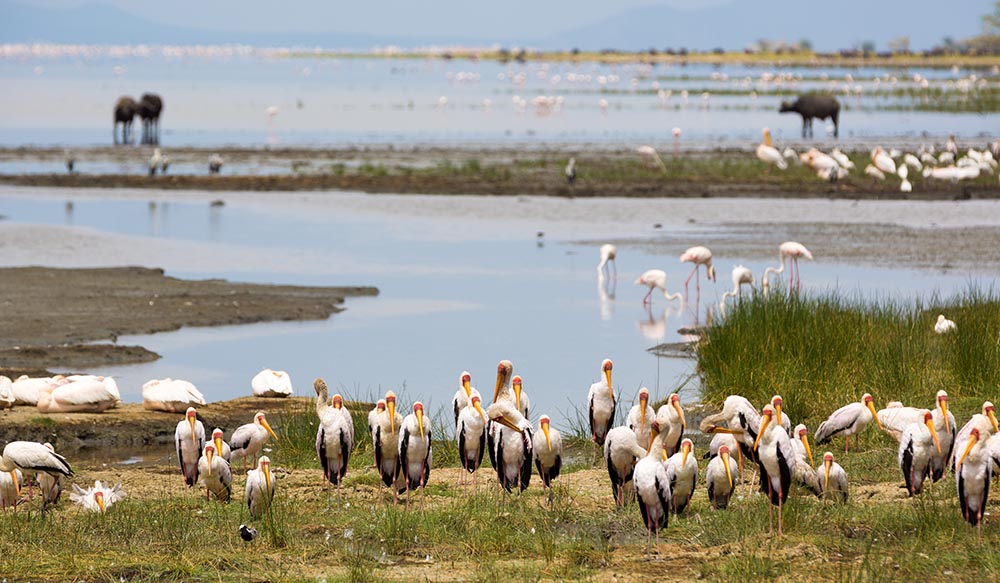
  • As well as large flocks of flamingos, attracted by the algae in the lake.
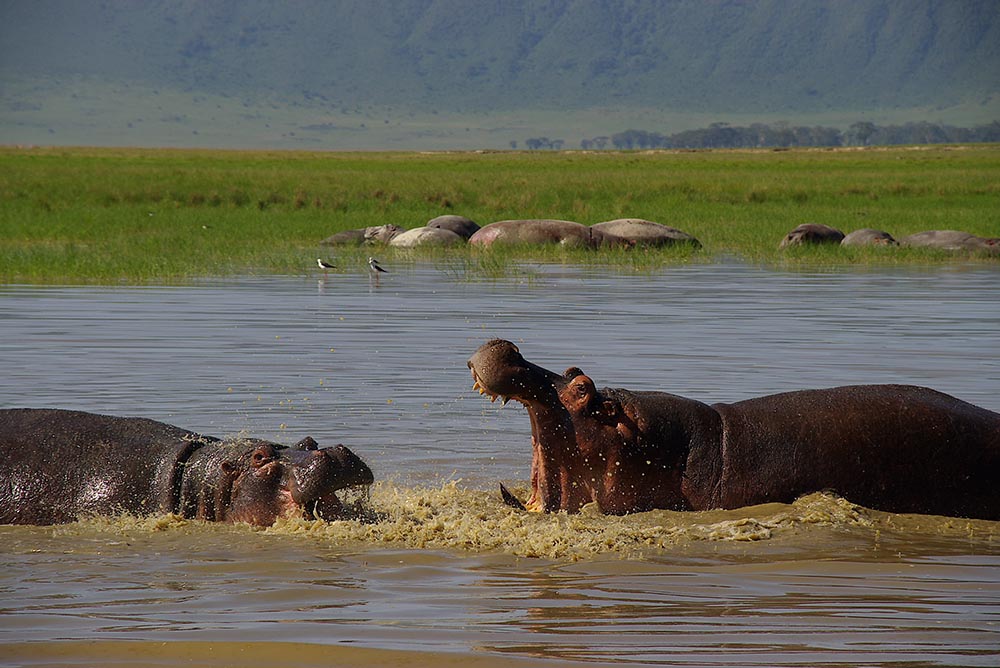
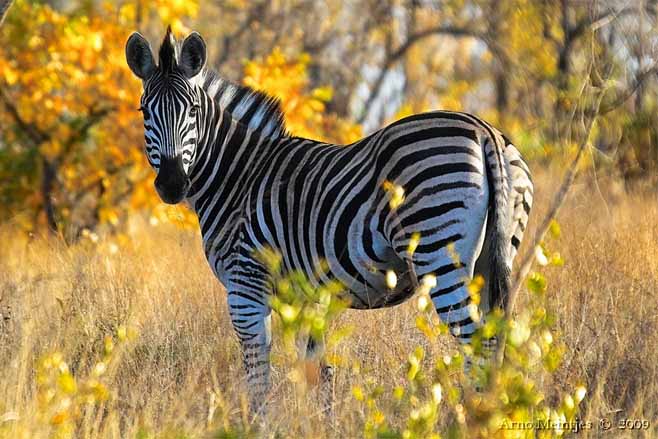
  • Other animals seen are zebras, impalas, monkeys, giraffes, buffalos, hippos, and others

This is the time of enjoy our nice lunch inside the park. After enjoying lunch time, the safari will continue. In the evening you will be transferred to the hotel.

Day 2: Lake Manyara National park – Serengeti Plains

Early wake up, after breakfast you will be picked up from hotel and driven through towards the Serengeti National Park, via the beautiful high lying farmland of Karatu and the Ngorongoro Conservation Area.

Leaving the highlands behind, we descend into the heart of wild Africa the Serengeti National Park with its endless plains, rolling into the distance as far as the eye can see.

We head to the central park area, known as the Seronera area, one of the richest wildlife habitats in the park, featuring the Seronera River, which provides a valuable water source to this area and therefore attracts wildlife well representative of most of the Serengeti’s species.

We arrive in time for lunch and enjoy an afternoon game drive in the Serengeti National Park.

Day 3: Serengeti Plains

The best adventure that you will never regret in Serengeti national park is to be one of among few fortunate people to glide in a Hot Air Balloon over the Serengeti Plains (available at additional cost by pre-arrangement). Floating silently above the awakening bush, while spotting wildlife and enjoying the amazing scenery of Africa, across rivers and over numerous small villages.

After breakfast game viewing drive along the Sogore River Circuit, which loops into the plains south of the Seronera River, and which is good for possible lion, Thomson gazelle, topi, ostrich and cheetah sightings. The visitor’s centre not far from the Serengeti Seronera Lodge and public campsites, is well worth a visit after the morning’s game drive. This nicely designed centre, offers some interesting wildlife displays as well as a gift shop selling information leaflets and maps of the area. The centre also has a shop where cold drinks and snacks can be purchased, as well as a picnic area and information trail up and around a nearby kopje. We will enjoy a relaxed picnic lunch at the centre in the shade of the giant acacia trees.

In the afternoon we will follow the Kopjes Circuit, which goes anti-clockwise around the Maasai Kopjes, which usually attract a number of lion and some formidably large cobras. Kopjes are weathered granite outcrops, scattered around the plains, most of which are miniature ecosystems, providing shade and drinking water in pools left in the rock after the rains. This makes the kopjes particularly good for spotting wildlife in the dry seasons including lions, which like to lie in wait for animals coming to drink water.

Dinner and overnight in the Seronera area, as per the standard and type of accommodation option requested.

Day 4: Ngorongoro Crater – Moshi

Day four, it is best to leave the hotel as early as possible so you can see the variety of animals that are only active during the morning hours; breakfast will be packed in lunchboxes specifically for this purpose. At 6:30 am you will set off for Ngorongoro Conservation Area, and after about an hour you will already be inside the crater

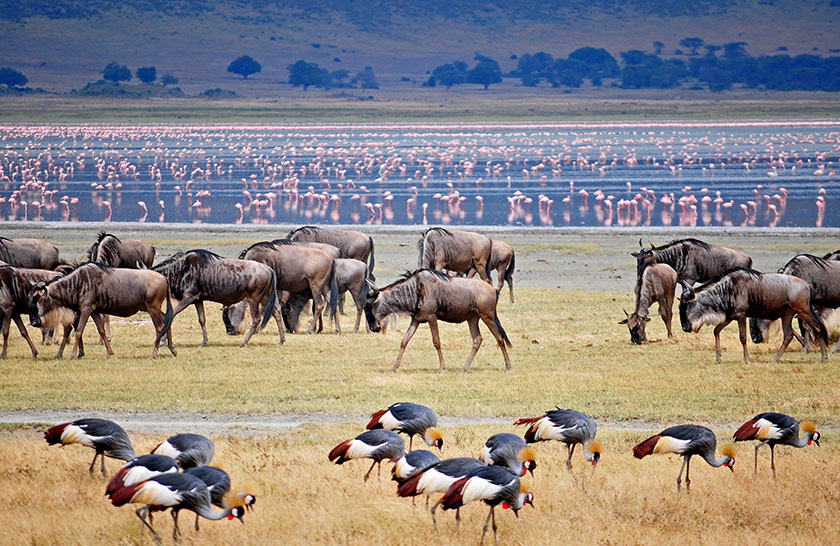
The Ngorongoro Crater is one of the most densely crowded African wildlife areas in the world and is home to an estimated 30,000 animals including some of Tanzania’s last remaining black rhino. Supported by a year round water supply and fodder,

Ngorongoro Crater is one of the most famous and interesting of Tanzania’s national parks because here you can find the greatest number of different animal species;-

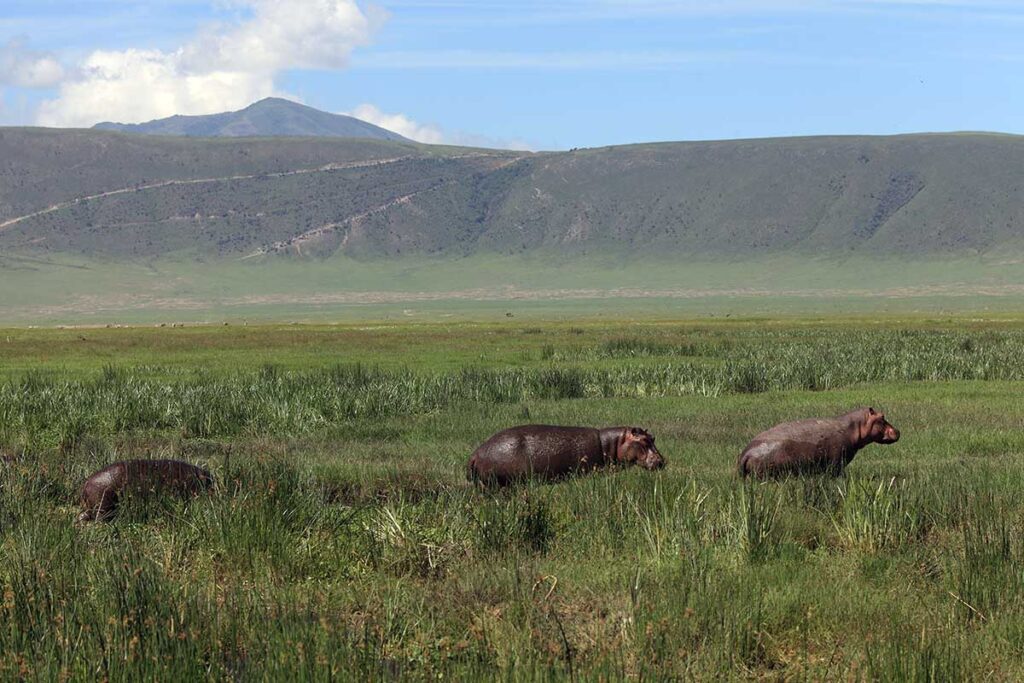
  • Include herds of wildebeest, zebra, buffalo, eland, warthog, hippo, and giant African elephants.
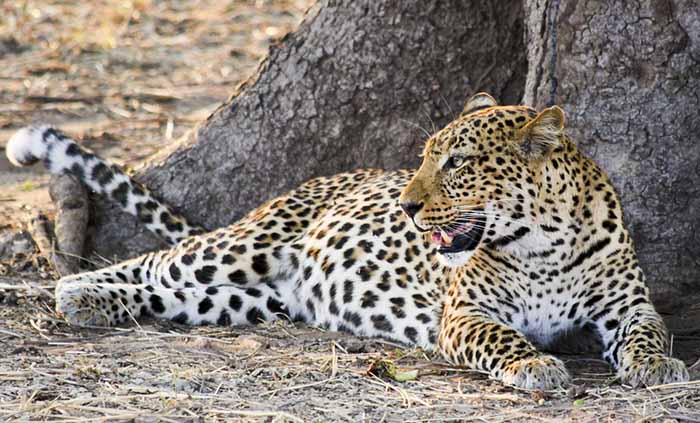
  • Another big draw card to this picturesque national park is the dense population of predators, which include lions, hyenas, jackals, cheetahs and the ever-elusive leopard

By enjoy a picnic lunch in the crater, after which we travel back to Moshi or Arusha where we will end our African safari adventure.

Departure dates 

The departure dates for all our African safaris, tours, travel and other trekking packages are totally flexible according to your own personal needs. Please contact us for further and more detailed information.

Safari includes

  • Pick up at Kilimanjaro International Airport
  • All accommodation before and after safari(breakfast and rooms)
  • Private professional safari guide
  • Private 4 x 4 safari with roof for game viewing
  • Entrance park fees and 18% VAT to our entrance fees
  • Entrance fees to all national parks
  • Maasai life style tour if your interest
  • All meals included(breakfast, lunch and dinner)

Safari exclude

  • Tips to your safari guide
  • Air tickets
  • Tanzania Visa fee
  • Lunch and dinner in hotel (only before and after safari)
  • Insurance

Tips for safari guide

  • $20-$40

Lake Manyara National Park

Lake Manyara National Park

Lake Manyara is one of Tanzania’s finest gems, stretching more than 30 miles (50 km) along the base of the Rift Valley escarpment. Explore this natural beauty, a great spot for bird watching and home to a large diversity of wildlife, with the help of your expert guide.

The Lake Manyara National Park is one of Tanzania’s most dramatically located African wildlife areas, consisting of a massive but shallow soda lake (covering two-thirds of the park) at the foot of the Great Rift Valley’s western escarpment.

The grassy floodplain, contrasting starkly with the intimacy of the forest, with expansive views eastward across the alkaline lake to the jagged blue volcanic peaks rising from the endless Maasai Steppes. See the large buffalo, wildebeest, and zebra herds congregating on the grassy plains.

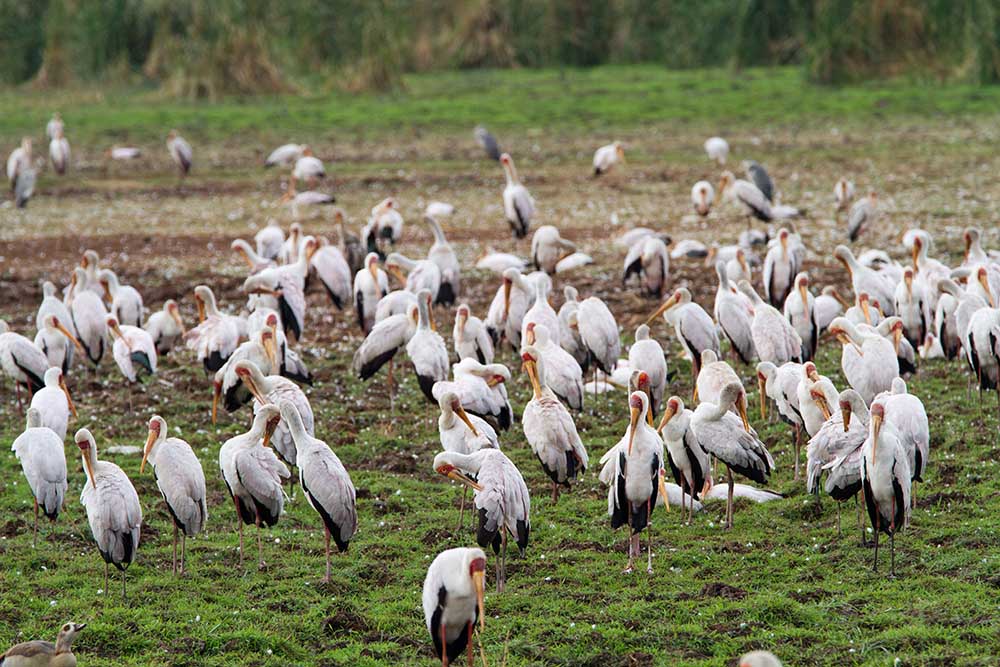
Manyara National Park provides the perfect introduction to Tanzania’s birdlife. More than 400 species have been recorded in the area, and even a first-time visitor to Africa might reasonably expect to observe 100 of these in one day. Highlights include thousands of pink-hued flamingos on their perpetual migration, as well as other large water birds such as pelicans, cormorants, and storks.

Attractiveness of Lake Manyara NP

The park’s varied habitat attracts a wide variety of animals, including

  • One of Africa’s densely populated African elephants herds, Lake Manyara’s famous tree-climbing lions
  • As well as large flocks of flamingos, attracted by the algae in the lake.
  • Large troops of baboons that frequently lounge along the roadside or blue monkeys scampering nimbly through the ancient mahogany trees.
  • Other animals seen are zebras, impalas, monkeys, giraffes, buffalos, hippos, and others

REALISTIC FACTS

Dry season runs from July to October. The scarcity of water makes it ideal for viewing large mammals. Travelers who venture to Lake Manyara between November and June will have the best chance of spotting rare birds and enjoying the waterfalls and canoeing during rainy season.

Tarangire National Park

Tarangire National Park

The Tarangire National Park is located between the meadows of Masai Steppe to the south east and the lakes of the Great Rift Valley to the north and west. Among the rolling area where the park lies, it occupies an area of 2,600 square kilometers. The perennial Tarangire River takes over the northern part of Tarangire. Through the cut ditches, the River flows upwards up to when it leaves the corner of the park, in the North West flowing into Lake Burungi. There are a number of wide swamps which dry into green plains during the dry season in the south.

Attractiveness of Tarangire National Park

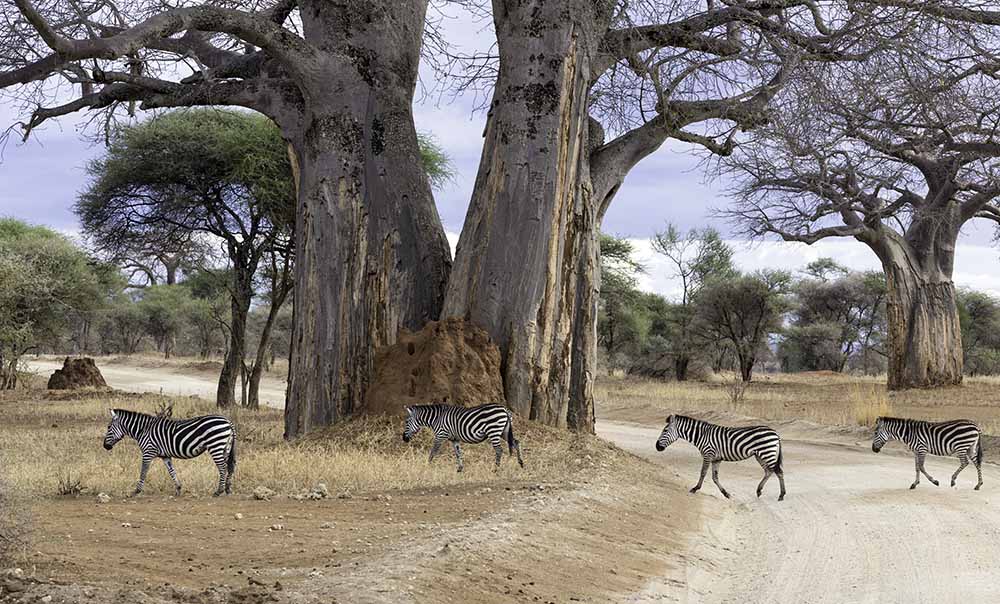
Its natural vegetation mainly consists of Acacia woodland and giant African Baobab trees, with huge swamp areas in the south. Both the river and the swamps act like a magnet for wild animals, during Tanzania’s dry season.

The Tarangire National Park is reputed to contain some of:

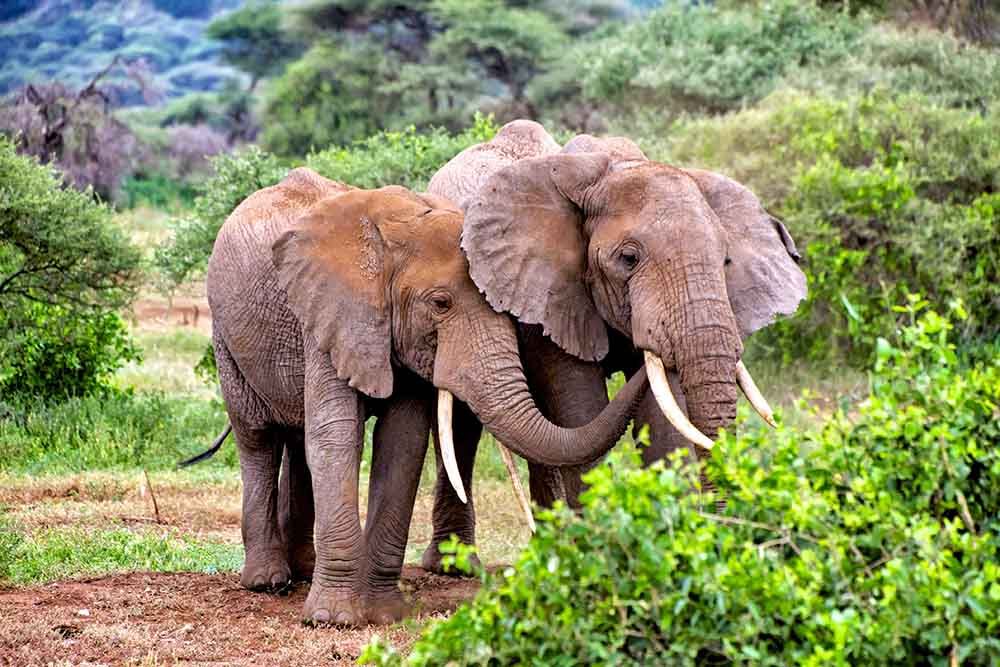
  • The largest elephant herds in Africa.
  • Keep your eyes trained for hartebeests, gazelles and exotic birds like the bateleur and martial eagle
  • Where open grasslands, acacia trees and the Tarangire River paint the wild landscape

REALISTIC FACTS

The wild animals in this park differ depending on the season. It is also linked to the fact that Tarangire is just a part of the bigger ecosystem. Many of the animals leave the park during the months of November to May. The zebras as well as large herds of wildebeests move into the north-western direction towards the Rift Valley floor amongst the large numbers of animals that spread across the large open areas of the Masaai Steppe.

The birds within the Tarangire are also quite many, there are over 500 species that have been identified here. The lovebirds that are yellow collared, the shy starlings are in plenty and widespread in Tanzania.

Serengeti National Park Safari

Serengeti National Park Safari

On a continent known for its wildlife and safaris, few national parks hold the same iconic status as the Serengeti, Tanzania’s oldest and most popular reserve. Home to all of Africa’s Big Five, this massive park spans some 12,000 square miles of savannah, open plains and rugged cliffs that some one million wildebeests, 200,000 zebra and 300,000 gazelle call home.

Each year, these animals make a three-week pilgrimage from the Serengeti to Maasai Mara in search of better grazing and more plentiful water. This incredible event, commonly referred to as “the great migration,” is unlike any other game viewing experience on earth. The sheer volume of animals can make passing in safari trucks nearly impossible, as thousands of zebras and wildebeests fan out over the plains. Regardless of the time of year, travelers will likely spot prides of lions, giraffes, rhinos, and maybe even a cheetah.

Attractiveness of Serengeti National Park

The best adventure that you will never regret in Serengeti national park is to be one of among few fortunate people to glide in a Hot Air Balloon over the Serengeti Plains (available at additional cost by pre-arrangement). Floating silently above the awakening bush, while spotting wildlife and enjoying the amazing scenery of Africa, across rivers and over numerous small villages.

Game viewing along the Sogore River Circuit, which loops into the plains south of the Seronera River, and which is good for possible lion, Thomson gazelle, topi, ostrich and cheetah sightings. The visitor’s centre not far from the Serengeti Seronera Lodge and public campsites, is well worth a visit after the morning’s game drive.

REALISTIC FACTS

Travelers looking to witness the migration should plan to visit the park between May and August and from October to December. While the concentration of animals is less impressive between June and October, visitors can still find an impressive array of wildlife and will likely catch predators on the hunt. The Serengeti has four lodges and six tented camps within its borders that offer travelers a variety of accommodations.

Ngorongoro Crater Safari

Ngorongoro Crater Safari

The Ngorongoro Conservation Area spans vast expanses of highland plains, savanna, savanna woodlands and forests. Established in 1959 as a multiple land use area, with wildlife coexisting with semi-nomadic Maasai pastoralists practicing traditional livestock grazing, it includes the spectacular Ngorongoro Crater, the world’s largest caldera. The property has global importance for biodiversity conservation due to the presence of globally threatened species, the density of wildlife inhabiting the area, and the annual migration of wildebeest, zebra, gazelles and other animals into the northern plains. Extensive archaeological research has also yielded a long sequence of evidence of human evolution and human-environment dynamics, including early hominid footprints dating back 3.6 million years.

Attractiveness of Ngorongoro Crater

Ngorongoro Crater is one of the most famous and interesting of Tanzania’s national parks because here you can find the greatest number of different animal species:

  • Include herds of wildebeest, zebra, buffalo, eland, warthog, hippo, and giant African elephants.
  • Another big draw card to this picturesque national park is the dense population of predators, which include lions, hyenas, jackals, cheetahs and the ever-elusive leopard

REALISTIC FACTS

The Ngorongoro Crater is one of the most densely crowded African wildlife areas in the world and is home to an estimated 30,000 animals including some of Tanzania’s last remaining black rhino. Supported by a year round water supply and fodder.

Umbwe Route (6 Days)

Umbwe Route (6 Days)

Umbwe route is a short, steep and direct route which based in the south and is said to be the most scenic and difficult one offered on Kilimanjaro. Main reason that Umbwe route considered to be very hard is its steepness in the first two days with extremely muddy.  Although the traffic on this route is low, the chances of success are also low. This route only recommended for experienced and well-trained climbers. Its short time of acclimatization within a 6-day/5-night tour.

ARRIVE IN TANZANIA

Arrive at the Kilimanjaro International Airport where you will be meet with All weather adventures representative, picked up there and transfer to hotel in Moshi town. Then you will meet your guide who will brief you on your upcoming trek and do an equipment check to make sure you have all the necessary mountain gear. Gear which is missing can be rented on this day.

breakfast

Hotel

Bed & Breakfast

Umbwe Route Prices:

6 DAYS CLIMB + 2DAYS IN HOTEL
1 Person
2-4 Persons
5-7 Persons
8-10 Persons
11+ Persons
UMBWE ROUTE
$1,750
$1,630
$1,570
$1,530
$1,470

Day 1: Umbwe Gate (1,600 meters) to Umbwe Cave Camp (2,850 meters)

Day one this morning, a guide and a mountain support crew will arrive at the hotel in order to meet you and hold a quick briefing with equipment check precede, you will be driven to the Machame Gate of Kilimanjaro National Park, where registration takes place. From there trekkers are transferred to the Umbwe Gate at 1,600 meters. Here you will start your trek with your guide and porters. The route follows a forestry track through the rainforest before steepening between the Lonzo and Umbwe Rivers. If the weather is clear you will get a good view of Kibo in the distance. As this part of Umbwe route goes through rainforest with its probability of rain showers do not forget your raincoat. Your support crew will have prepared the camp and dinner by the time you get there.

Day 2: Umbwe Cave (3000meters) to Barronco Camp (3960meters)

Day two the path gets steeper on this section, as you get out of the forest along the Umbwe ridge the route descends slightly to the Barranco camp situated in the valley. You will notice the camp is pretty busy. This is because you will be joining hikers from the Machame, Lemosho and Shira Route here. Therefore the population will be bigger. 

Day 3: Barranco Camp (3960meters) to Karanga Camp (3963meters)

Early wakeup, breakfast and starts with a steep climb up to Barranco Wall. No technical skills are required but you will need to use all four limbs to scramble up to the top. From here you will follow an up and down route along the Southern Circuit through the Karanga Valley and up to Karanga Camp (3,960 meters). For those feeling strong we will go for a mid-afternoon acclimatization trek up to around 4200m before descending back to camp for the night.

Day 4: Karanga Camp (3963meters) to Barafu Camp (4640meters)

Our day starts by descending into the Great Barranco, a huge ravine. We then exit steeply, up the Great Barranco Wall, which divides us from the southeastern slopes of Kibo. It’s a climb over rock, not technical, but long and tiring. Passing underneath the Heim and Kersten glaciers, we head towards the Karanga valley, which is our last stop for fresh water before the summit. Scree now forms the terrain as we walk through arid and desolate land towards Barafu camp. 

Day 5: Barafu Camp (4640meters) to UHURU PEAK (5895meters) and then to Mweka Camp (3100meters)

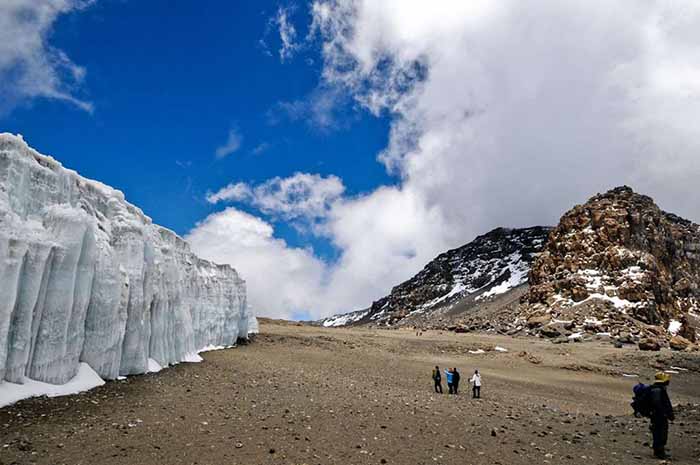
Day five, we start off at around midnight, and walk steeply upwards to the summit glaciers. The ascent to crater rim is the most challenging part of the entire trek. The trail is very steep until you reach the crater rim at Stella Point.

The hike from Stella to Uhuru Peak is gradual climb and as far as hikes go not very difficult. The altitude makes the hike long and tiring. Another hour’s walking takes us to the summit, Uhuru Peak (5895m). We begin our descent by returning to Stella Point and then descending on scree slope and track back to Barafu Camp for breakfast, before finally heading down to Mweka Camp for a long well-earned rest.

Day 6: Trek Mweka Camp (3100meters) to Mweka Gate (1630meters)

After getting a breakfast, gentle trek takes us down through the rainforest to Mweka Gate, where we complete park formalities and receive certificates, which you can hang up with pride! After saying goodbye to your mountain guides, a short transfer follows to take you back to your hotel in Moshi. Once there, you can take a warm and relaxing shower and celebrate your success in reaching the summit of the Kilimanjaro. 

Day 7: Depart Tanzania

This day left for your next destination. A vehicle will take you back to the Hotel in Moshi, where it is definitely time for celebration. Depart for the airport or other destinations in Tanzania. If you have safari, then might be used to beginning your safari or fly to beaches in Zanzibar so as we can arrange many reasonably priced trips and safaris around Moshi and the Kilimanjaro region. If you fly back home our vehicle will be ready to take you to the airport at your time.

The climb cost includes:

  • Pick up at International Airport;
  • Transfer to the hotel Parkview inn or Kilimanjaro wonders hotel
  • Professional mountain crew. Each participant will be provided with a porter (who can carry up to 15 kg of personal baggage);
  • Fair wages for the mountain crew as approved by the Kilimanjaro National Park Authority (KINAPA), Kilimanjaro Association of Tour Operators (KIATO)
  • Kilimanjaro National Park permits.
  • Kilimanjaro National Park rescue fees
  • Camping/hut fees
  • 3 meals daily while on the mountain. The menu includes different soups, garnishes, several types of fish and meat, fresh fruit and vegetables; vegetarian options are available upon request
  • Modern tents
  • First aid kit
  • Warm and comfortable sleeping pads (2 inches thick)
  • Portable flush toilets can be provided for free upon clients request
  • Group equipment (dining tent, table, chairs, crockery and cutlery)
  • Meeting the group at the National Park exit and transfer to the hotel
  • Accommodation after the climb
  • International certificates for a successful ascent
  • Return transfer to Kilimanjaro airport.

The climb cost excludes:

  • Flights tickets
  • Visa fee
  • Personal gear rental
  • Items of a personal nature
  • Laundry services
  • Tips for the mountain

Tip on mountain Kilimanjaro is recommended for group sharing as following:

  • Guide $15 – $20 per day
  • Cook $10 – $15 per day
  • Porter $8 – $10 per day

Northern Circuit Route (9 Days)

Northern Circuit Route (9 Days)

The newest addition and most exciting route to the Kilimanjaro climbing. This is the longest route in terms of time and distance travelled while this route offers the highest level of successful summits and an amazingly beautiful journey.  Even though it is the most expensive climb option, with a very high success rate. It begins in the West at the Londorossi Gate and follows the same path as the Lemosho route for the first two days. After crossing the Shira plateau the path veers north near Lava Tower, following the longer Northern Circuit instead of the more popular Southern Circuit via Barranco Valley The route circles around the quieter northern slopes to the east side of the mountain.

ARRIVE IN TANZANIA

Arrive at the Kilimanjaro International Airport where you will be meet with All weather adventures representative, picked up there and transfer to hotel in Moshi town. Then you will meet your guide who will brief you on your upcoming trek and do an equipment check to make sure you have all the necessary mountain gear. Gear which is missing can be rented on this day.

breakfast

Hotel

Bed & Breakfast

Umbwe Route Prices:

6 DAYS CLIMB + 2DAYS IN HOTEL
1 Person
2-4 Persons
5-7 Persons
8-10 Persons
11+ Persons
UMBWE ROUTE
$1,750
$1,630
$1,570
$1,530
$1,470

Day 1: Londorossi Gate (2,100 meters) – start point 2,360 meters to Mti Mkubwa Camp (2,820 meters) 

The Northern Circuit Route begins at Londorossi Gate (2,100 meters) in the West, the same start point as the Lemosho Route. The drive to Londorossi Gate takes approximately two hours from Moshi and considerably longer from Arusha. Registration with the Kilimanjaro National Park authorities occurs at the gate and then you will be driven further up the mountain to the trailhead starting point. Most tour operators serve lunch here before the short first day trek to Mti Mkubwa Camp (2,820 meters) begins. You may get lucky and spot large wildlife like elephant and buffalo that sometimes emerge from the rainforest onto the path as you trek towards your first camp. Dinner will be served when you reach Mti Mkubwa Camp.

Day 2: Mti Mkubwa Camp (2,820 meters) to Shira Camp 1 (3,610 meters) 

On day two you will spend the first hour trekking through the last section of rainforest path before entering the low alpine moorland zone which follows up onto the Shira Plateau. The trek is relatively short and gradual, ending at Shira Camp 1 (3,610 meters).

Day 3: Shira Camp 1 (3,610 meters) to Moir Camp (4,200 meters) 

Day three is a long trek heading east which passes through the ‘Garden of the Senecios’ and then enters the high alpine desert zone. The morning is spent trekking up to Lava Tower and the iconic Shark’s Tooth rock formation at 4,600 meters, where you will have lunch. After lunch you will join the northern circuit heading down to Moir Camp at 4,200 meters. This is an important day in your trek as you will get to experience high altitude and then sleep low, which is good for the acclimatization process. 

Day 4: Moir Camp (4,200 meters) to Buffalo Camp (4,020 meters)

Day four involves a moderately steep climb out of Moir Valley. Trekkers can take a small detour here to climb the summit of Little Lent Hill at 4,375 meters before returning to the Northern Circuit trail. From here the route follows a series of inclines and declines, skirting around the northern slopes of Kibo to Buffalo Camp (4,020 meters).The trek gives great vistas out across the plains that lie north of Kilimanjaro and stretch out to the Kenyan / Tanzanian border. You will arrive at Buffalo Camp just after midday, where you will have lunch and have time to rest after a long day hiking. 

Day 5: Buffalo Camp (4,020 meters) to Rongai Third Cave (3,800 meters)

 Day five starts with a climb up the Buffalo ridge and down into Porfu Camp where lunch is usually served. The route then continues east around the northern slopes to the Rongai Third Cave at 3,800 meters. The trek is shorter than the day before and by now you should be feeling well acclimatized to the altitude. You will arrive at the Third Cave just around mid-afternoon. 

Day 6: 3rd Cave (3,800 meters) to School Hut (4,800 meters)

On day six after breakfast you begin your way to Barafu Summit Camp (4,640 m), the starting point for a night summiting Uhuru Peak (5,895 m). The climb will take us across desolate scree slopes with no vegetation around us at all. It’s a tough steep walk made more difficult by the altitude. Our team will set up a camp for you ahead of time, including tents and sleeping bags, so you can relax. After regaining strength, you have to complete an acclimatization hike towards the intermediate Kosovo Summit Camp (4,800 m) and then back to Barafu Camp, where you will be served a hot dinner. It is better to spend the remainder of the day resting and sleeping before night summiting.

Day 7: School Hut (4,800 meters) to UHURU PEAK (5895meters) to Crater Camp (5,790meters)

Wake before dawn to start your summit approach. You’ll reach Uhuru Peak in the early afternoon, when few groups are around. A short descent brings you to Crater Camp, set in soft sands near the famed Furtwangler Glacier. Crater camp is not a route in it’s own right but a challenging extension which in principle can be added to any route. It involves sleeping overnight in the bowl of the crater. An amazing experience enjoyed by only a few of the most adventurous climbers.

Day 8: Crater Camp (5,790m) to Millennium Camp (3790m) 

After an early breakfast at Crater Camp on Mount Kilimanjaro, you begin your descent from the summit zone, retracing your steps past Stella Point and down toward Barafu Camp. As you lose altitude, breathing becomes easier and energy slowly returns. Following a short rest, you continue descending through alpine desert terrain until you reach Millennium Camp at 3,790 meters. Warmer air and thicker vegetation welcome you back to lower elevations, where you enjoy dinner and a well-deserved rest.

Day 9: Millennium Camp (3790meters) to Mweka Gate (1630meters)

In the morning after early breakfast, we begin our descent by returning to Stella Point and then descending on scree slope passing Barafu camp for a short break before heading down to Millennium Camp for a long well-earned rest. 

Day 10: Depart Tanzania

This day left for your next destination. A vehicle will take you back to the Hotel in Moshi, where it is definitely time for celebration. Depart for the airport or other destinations in Tanzania. If you have safari, then might be used to beginning your safari or fly to beaches in Zanzibar so as we can arrange many reasonably priced trips and safaris around Moshi and the Kilimanjaro region. If you fly back home our vehicle will be ready to take you to the airport at your time.

The climb cost includes:

  • Pick up at International Airport;
  • Transfer to the hotel Parkview inn or Kilimanjaro wonders hotel
  • Professional mountain crew. Each participant will be provided with a porter (who can carry up to 15 kg of personal baggage);
  • Fair wages for the mountain crew as approved by the Kilimanjaro National Park Authority (KINAPA), Kilimanjaro Association of Tour Operators (KIATO)
  • Kilimanjaro National Park permits.
  • Kilimanjaro National Park rescue fees
  • Camping/hut fees
  • 3 meals daily while on the mountain. The menu includes different soups, garnishes, several types of fish and meat, fresh fruit and vegetables; vegetarian options are available upon request
  • Modern tents
  • First aid kit
  • Warm and comfortable sleeping pads (2 inches thick)
  • Portable flush toilets can be provided for free upon clients request
  • Group equipment (dining tent, table, chairs, crockery and cutlery)
  • Meeting the group at the National Park exit and transfer to the hotel
  • Accommodation after the climb
  • International certificates for a successful ascent
  • Return transfer to Kilimanjaro airport.

The climb cost excludes:

  • Flights tickets
  • Visa fee
  • Personal gear rental
  • Items of a personal nature
  • Laundry services
  • Tips for the mountain

Tip on mountain Kilimanjaro is recommended for group sharing as following:

  • Guide $15 – $20 per day
  • Cook $10 – $15 per day
  • Porter $8 – $10 per day

Northern Circuit Route (8 Days)

Northern Circuit Route (8 Days)

The newest addition and most exciting route to the Kilimanjaro climbing. This is the longest route in terms of time and distance travelled while this route offers the highest level of successful summits and an amazingly beautiful journey.  Even though it is the most expensive climb option, with a very high success rate. It begins in the West at the Londorossi Gate and follows the same path as the Lemosho route for the first two days. After crossing the Shira plateau the path veers north near Lava Tower, following the longer Northern Circuit instead of the more popular Southern Circuit via Barranco Valley The route circles around the quieter northern slopes to the east side of the mountain.

ARRIVE IN TANZANIA

Arrive at the Kilimanjaro International Airport where you will be meet with All weather adventures representative, picked up there and transfer to hotel in Moshi town. Then you will meet your guide who will brief you on your upcoming trek and do an equipment check to make sure you have all the necessary mountain gear. Gear which is missing can be rented on this day.

breakfast

Hotel

Bed & Breakfast

Umbwe Route Prices:

6 DAYS CLIMB + 2DAYS IN HOTEL
1 Person
2-4 Persons
5-7 Persons
8-10 Persons
11+ Persons
UMBWE ROUTE
$1,750
$1,630
$1,570
$1,530
$1,470

Day 1: Londorossi Gate (2,100 meters) – start point 2,360 meters to Mti Mkubwa Camp (2,820 meters) 

The Northern Circuit Route begins at Londorossi Gate (2,100 meters) in the West, the same start point as the Lemosho Route. The drive to Londorossi Gate takes approximately two hours from Moshi and considerably longer from Arusha. Registration with the Kilimanjaro National Park authorities occurs at the gate and then you will be driven further up the mountain to the trailhead starting point. Most tour operators serve lunch here before the short first day trek to Mti Mkubwa Camp (2,820 meters) begins. You may get lucky and spot large wildlife like elephant and buffalo that sometimes emerge from the rainforest onto the path as you trek towards your first camp. Dinner will be served when you reach Mti Mkubwa Camp.

Day 2: Mti Mkubwa Camp (2,820 meters) to Shira Camp 1 (3,610 meters) 

On day two you will spend the first hour trekking through the last section of rainforest path before entering the low alpine moorland zone which follows up onto the Shira Plateau. The trek is relatively short and gradual, ending at Shira Camp 1 (3,610 meters).

Day 3: Shira Camp 1 (3,610 meters) to Moir Camp (4,200 meters) 

Day three is a long trek heading east which passes through the ‘Garden of the Senecios’ and then enters the high alpine desert zone. The morning is spent trekking up to Lava Tower and the iconic Shark’s Tooth rock formation at 4,600 meters, where you will have lunch. After lunch you will join the northern circuit heading down to Moir Camp at 4,200 meters. This is an important day in your trek as you will get to experience high altitude and then sleep low, which is good for the acclimatization process. 

Day 4: Moir Camp (4,200 meters) to Buffalo Camp (4,020 meters)

Day four involves a moderately steep climb out of Moir Valley. Trekkers can take a small detour here to climb the summit of Little Lent Hill at 4,375 meters before returning to the Northern Circuit trail. From here the route follows a series of inclines and declines, skirting around the northern slopes of Kibo to Buffalo Camp (4,020 meters).The trek gives great vistas out across the plains that lie north of Kilimanjaro and stretch out to the Kenyan / Tanzanian border. You will arrive at Buffalo Camp just after midday, where you will have lunch and have time to rest after a long day hiking. 

Day 5: Buffalo Camp (4,020 meters) to Rongai Third Cave (3,800 meters)

 Day five starts with a climb up the Buffalo ridge and down into Porfu Camp where lunch is usually served. The route then continues east around the northern slopes to the Rongai Third Cave at 3,800 meters. The trek is shorter than the day before and by now you should be feeling well acclimatized to the altitude. You will arrive at the Third Cave just around mid-afternoon. 

Day 6: 3rd Cave (3,800 meters) to School Hut (4,800 meters)

On day six after breakfast you begin your way to Barafu Summit Camp (4,640 m), the starting point for a night summiting Uhuru Peak (5,895 m). The climb will take us across desolate scree slopes with no vegetation around us at all. It’s a tough steep walk made more difficult by the altitude. Our team will set up a camp for you ahead of time, including tents and sleeping bags, so you can relax. After regaining strength, you have to complete an acclimatization hike towards the intermediate Kosovo Summit Camp (4,800 m) and then back to Barafu Camp, where you will be served a hot dinner. It is better to spend the remainder of the day resting and sleeping before night summiting.

Day 7: School Hut (4,800 meters) to Uhuru Peak (5,895 meters) and then onto Millennium Camp (3,950 meters)

Wake before dawn to start your summit approach. You’ll reach Uhuru Peak in the early afternoon, when few groups are around. A short descent brings you to Crater Camp, set in soft sands near the famed Furtwangler Glacier. Crater camp is not a route in it’s own right but a challenging extension which in principle can be added to any route. It involves sleeping overnight in the bowl of the crater. An amazing experience enjoyed by only a few of the most adventurous climbers.

Day 8: Millennium Camp (3790meters) to Mweka Gate (1630meters)

In the morning after early breakfast, we begin our descent by returning to Stella Point and then descending on scree slope passing Barafu camp for a short break before heading down to Millennium Camp for a long well-earned rest. 

Day 9: Depart Tanzania

This day left for your next destination. A vehicle will take you back to the Hotel in Moshi, where it is definitely time for celebration. Depart for the airport or other destinations in Tanzania. If you have safari, then might be used to beginning your safari or fly to beaches in Zanzibar so as we can arrange many reasonably priced trips and safaris around Moshi and the Kilimanjaro region. If you fly back home our vehicle will be ready to take you to the airport at your time.

The climb cost includes:

  • Pick up at International Airport;
  • Transfer to the hotel Parkview inn or Kilimanjaro wonders hotel
  • Professional mountain crew. Each participant will be provided with a porter (who can carry up to 15 kg of personal baggage);
  • Fair wages for the mountain crew as approved by the Kilimanjaro National Park Authority (KINAPA), Kilimanjaro Association of Tour Operators (KIATO)
  • Kilimanjaro National Park permits.
  • Kilimanjaro National Park rescue fees
  • Camping/hut fees
  • 3 meals daily while on the mountain. The menu includes different soups, garnishes, several types of fish and meat, fresh fruit and vegetables; vegetarian options are available upon request
  • Modern tents
  • First aid kit
  • Warm and comfortable sleeping pads (2 inches thick)
  • Portable flush toilets can be provided for free upon clients request
  • Group equipment (dining tent, table, chairs, crockery and cutlery)
  • Meeting the group at the National Park exit and transfer to the hotel
  • Accommodation after the climb
  • International certificates for a successful ascent
  • Return transfer to Kilimanjaro airport.

The climb cost excludes:

  • Flights tickets
  • Visa fee
  • Personal gear rental
  • Items of a personal nature
  • Laundry services
  • Tips for the mountain

Tip on mountain Kilimanjaro is recommended for group sharing as following:

  • Guide $15 – $20 per day
  • Cook $10 – $15 per day
  • Porter $8 – $10 per day

Lemosho Route (9 Days)

Lemosho Route (9 Days)

A relatively new route up to the mountain and extremely beautiful. It’s our favorite routes because it offers a great balance of high summit success rate, scenic views and low traffic. This may be the most beautiful route to take, with breathtaking views on all sides of the mountain and if you wanted a more private experience with fewer climbers This is one of the few routes where an armed ranger accompanies our groups, since there are still animals in the forest around the Lemosho Glades. But 8 days is preferable for better acclimatization and summit success.

ARRIVE IN TANZANIA

Arrive at the Kilimanjaro International Airport where you will be meet with All weather adventures representative, picked up there and transfer to hotel in Moshi town. Then you will meet your guide who will brief you on your upcoming trek and do an equipment check to make sure you have all the necessary mountain gear. Gear which is missing can be rented on this day.

breakfast

Hotel

Bed & Breakfast

Lemosho Route Prices:

8 DAYS CLIMB + 2DAYS IN HOTEL
1 Person
2-4 Persons
5-7 Persons
8-10 Persons
11+ Persons
LEMOSHO ROUTE
$2,650
$2,510
$2,460
$2,410
$2,360

Day 1: Lemosho Glades (2385meters) to Big Tree Camp (2780meters) 

After breakfast and briefing from your guide you will be collected from your hotel in Moshi and you will be driven to Lemosho gate located on the western side of Kilimanjaro. After the registration process you will still start our climb steadily through the forests of the Lemosho glades to reach Big Tree camp where you will be spending the night.

Day 2: Big Tree Camp (2780meters) to Shira 1 Camp (3900meters) 

Day two will trek across the rain forest and into savannah of tall grasses, heather and volcanic rock draped with lichen beards. Our destination for today is the Shira 1 Camp from where there are often views of Kibo Peak floating on the clouds. We gain a reasonable amount of altitude today and parts of the route are fairly steep.

Day 3: Shira 1 Camp (3500meters) to Shira 2 Camp (3960meters)

On day three we depart from Shira 1 Camp (3,500 meters) and a light trekking towards the second high altitude camp: Shira 2 Camp (3,900 meters). This trek is not difficult and you will be able to enjoy spectacular views of Africa and the unique flora of Kilimanjaro and the surrounding area. Shira 2 Camp is the best place on the trip to see Mount Meru (the fifth summit of Africa), weather permitting. When you arrive to camp you will have lunch, and after a two-hour rest everyone will complete an acclimatization hike towards Lava Tower Camp that features a 200meter gain in altitude.

Day 4: Shira 2 Camp (3900meters) to Barranco Camp (3960meters) 

Your trek starts with an ascent with far reaching panoramic views, walking in to the climatic zone of the upland desert and on the lava ridges beneath the glaciers of the Western Breach. You will reach the distinct pinnacle of the Lava Tower (4640 m), our high point for the day and a great place to enjoy your lunch. In the afternoon we make a steep descent to our camp for the night, located in the base of the Great Barranco Valley (3960 m), sheltered by towering cliffs but with extensive views of the plains below.

Day 5: Barranco Camp (3960m) to Karanga Camp (3963m) 

On day five early wakeup, breakfast and the start of summiting Barranco Wall. Hiking up the gorge wall is not technical but long and tiring, only takes around an hour. After the climb you can have a rest and take photos in front of the Kibo volcano. Then you start a more difficult hike to Karanga Camp, which features numerous ascents and descents during the route, but don’t worry: our guides are experts at choosing an optimal pace for the group. After reaching the camp you will be offered warm lunch. After a couple of hours you will have to complete an acclimatization hike in the direction of Barafu Camp with a 200-meter gain in altitude, and then descent back down to the camp.

Day 6: Karanga Camp (3963meters) to Barafu Camp (4640meters) 

On day six after breakfast you begin your way to Barafu Summit Camp (4,640 m), the starting point for a night summiting Uhuru Peak (5,895 m). The climb will take us across desolate scree slopes with no vegetation around us at all. It’s a tough steep walk made more difficult by the altitude. Our team will set up a camp for you ahead of time, including tents and sleeping bags, so you can relax. After regaining strength, you have to complete an acclimatization hike towards the intermediate Kosovo Summit Camp (4,800 m) and then back to Barafu Camp, where you will be served a hot dinner. It is better to spend the remainder of the day resting and sleeping before night summiting.

Day 7: Barafu Camp (4640meters) to UHURU PEAK (5895meters) to Mweka Camp (3100meters)

We start off at around midnight, and walk steeply upwards to the summit glaciers. We will be climbing scree for 4 to 5 hours but gain incredible height over a short distance. The views are spectacular. We should be on the crater rim at Stella Point (5739m) as the first rays of the sun hit us. Spectacular ice cliffs within the crater surround us and the views to jagged Mawenzi peak and beyond are breathtaking. Another hour’s walking takes us to the summit, Uhuru Peak (5895m). We begin our descent by returning to Stella Point and then descending on scree slope and track back to Barafu Camp for breakfast, before finally heading down to Mweka Camp for a long well-earned rest.

Day 8: Trek Mweka Camp (3100m) to Mweka Gate (1630m) 

A gentle trek takes us down through the rainforest to Mweka Gate, where we complete park formalities and receive certificates, which you can hang up with pride! We are then met by our vehicles and return to the hotel in Moshi, where you can treat yourself to a welcome shower then celebrate with cold drinks. Overnight at your arranged Hotel.

Day 9: Depart Tanzania

This day left for your next destination. A vehicle will take you back to the Hotel in Moshi, where it is definitely time for celebration. Depart for the airport or other destinations in Tanzania. If you have safari, then might be used to beginning your safari or fly to beaches in Zanzibar so as we can arrange many reasonably priced trips and safaris around Moshi and the Kilimanjaro region. If you fly back home our vehicle will be ready to take you to the airport at your time.

The climb cost includes:

  • Pick up at International Airport;
  • Transfer to the hotel Parkview inn or Kilimanjaro wonders hotel
  • Professional mountain crew. Each participant will be provided with a porter (who can carry up to 15 kg of personal baggage);
  • Fair wages for the mountain crew as approved by the Kilimanjaro National Park Authority (KINAPA), Kilimanjaro Association of Tour Operators (KIATO)
  • Kilimanjaro National Park permits.
  • Kilimanjaro National Park rescue fees
  • Camping/hut fees
  • 3 meals daily while on the mountain. The menu includes different soups, garnishes, several types of fish and meat, fresh fruit and vegetables; vegetarian options are available upon request
  • Modern tents
  • First aid kit
  • Warm and comfortable sleeping pads (2 inches thick)
  • Portable flush toilets can be provided for free upon clients request
  • Group equipment (dining tent, table, chairs, crockery and cutlery)
  • Meeting the group at the National Park exit and transfer to the hotel
  • Accommodation after the climb
  • International certificates for a successful ascent
  • Return transfer to Kilimanjaro airport.

The climb cost excludes:

  • Flights tickets
  • Visa fee
  • Personal gear rental
  • Items of a personal nature
  • Laundry services
  • Tips for the mountain

Tip on mountain Kilimanjaro is recommended for group sharing as following:

  • Guide $15 – $20 per day
  • Cook $10 – $15 per day
  • Porter $8 – $10 per day

Lemosho Route (8 Days)

Lemosho Route (8 Days)

A relatively new route up to the mountain and extremely beautiful. It’s our favorite routes because it offers a great balance of high summit success rate, scenic views and low traffic. This may be the most beautiful route to take, with breathtaking views on all sides of the mountain and if you wanted a more private experience with fewer climbers This is one of the few routes where an armed ranger accompanies our groups, since there are still animals in the forest around the Lemosho Glades. But 8 days is preferable for better acclimatization and summit success.

ARRIVE IN TANZANIA

Arrive at the Kilimanjaro International Airport where you will be meet with All weather adventures representative, picked up there and transfer to hotel in Moshi town. Then you will meet your guide who will brief you on your upcoming trek and do an equipment check to make sure you have all the necessary mountain gear. Gear which is missing can be rented on this day.

breakfast

Hotel

Bed & Breakfast

Lemosho Route Prices:

8 DAYS CLIMB + 2DAYS IN HOTEL
1 Person
2-4 Persons
5-7 Persons
8-10 Persons
11+ Persons
LEMOSHO ROUTE
$2,650
$2,510
$2,460
$2,410
$2,360

Day 1: Lemosho Glades (2385meters) to Big Tree Camp (2780meters) 

After breakfast and briefing from your guide you will be collected from your hotel in Moshi and you will be driven to Lemosho gate located on the western side of Kilimanjaro. After the registration process you will still start our climb steadily through the forests of the Lemosho glades to reach Big Tree camp where you will be spending the night.

Day 2: Big Tree Camp (2780meters) to Shira 1 Camp (3900meters) 

Day two will trek across the rain forest and into savannah of tall grasses, heather and volcanic rock draped with lichen beards. Our destination for today is the Shira 1 Camp from where there are often views of Kibo Peak floating on the clouds. We gain a reasonable amount of altitude today and parts of the route are fairly steep.

Day 3: Shira 1 Camp (3500meters) to Shira 2 Camp (3960meters)

On day three we depart from Shira 1 Camp (3,500 meters) and a light trekking towards the second high altitude camp: Shira 2 Camp (3,900 meters). This trek is not difficult and you will be able to enjoy spectacular views of Africa and the unique flora of Kilimanjaro and the surrounding area. Shira 2 Camp is the best place on the trip to see Mount Meru (the fifth summit of Africa), weather permitting. When you arrive to camp you will have lunch, and after a two-hour rest everyone will complete an acclimatization hike towards Lava Tower Camp that features a 200meter gain in altitude.

Day 4: Shira 2 Camp (3900meters) to Barranco Camp (3960meters) 

Your trek starts with an ascent with far reaching panoramic views, walking in to the climatic zone of the upland desert and on the lava ridges beneath the glaciers of the Western Breach. You will reach the distinct pinnacle of the Lava Tower (4640 m), our high point for the day and a great place to enjoy your lunch. In the afternoon we make a steep descent to our camp for the night, located in the base of the Great Barranco Valley (3960 m), sheltered by towering cliffs but with extensive views of the plains below.

Day 5: Barranco Camp (3960m) to Karanga Camp (3963m) 

On day five early wakeup, breakfast and the start of summiting Barranco Wall. Hiking up the gorge wall is not technical but long and tiring, only takes around an hour. After the climb you can have a rest and take photos in front of the Kibo volcano. Then you start a more difficult hike to Karanga Camp, which features numerous ascents and descents during the route, but don’t worry: our guides are experts at choosing an optimal pace for the group. After reaching the camp you will be offered warm lunch. After a couple of hours you will have to complete an acclimatization hike in the direction of Barafu Camp with a 200-meter gain in altitude, and then descent back down to the camp.

Day 6: Karanga Camp (3963meters) to Barafu Camp (4640meters) 

On day six after breakfast you begin your way to Barafu Summit Camp (4,640 m), the starting point for a night summiting Uhuru Peak (5,895 m). The climb will take us across desolate scree slopes with no vegetation around us at all. It’s a tough steep walk made more difficult by the altitude. Our team will set up a camp for you ahead of time, including tents and sleeping bags, so you can relax. After regaining strength, you have to complete an acclimatization hike towards the intermediate Kosovo Summit Camp (4,800 m) and then back to Barafu Camp, where you will be served a hot dinner. It is better to spend the remainder of the day resting and sleeping before night summiting.

Day 7: Barafu Camp (4640meters) to UHURU PEAK (5895meters) to Mweka Camp (3100meters)

We start off at around midnight, and walk steeply upwards to the summit glaciers. We will be climbing scree for 4 to 5 hours but gain incredible height over a short distance. The views are spectacular. We should be on the crater rim at Stella Point (5739m) as the first rays of the sun hit us. Spectacular ice cliffs within the crater surround us and the views to jagged Mawenzi peak and beyond are breathtaking. Another hour’s walking takes us to the summit, Uhuru Peak (5895m). We begin our descent by returning to Stella Point and then descending on scree slope and track back to Barafu Camp for breakfast, before finally heading down to Mweka Camp for a long well-earned rest.

Day 8: Trek Mweka Camp (3100m) to Mweka Gate (1630m) 

A gentle trek takes us down through the rainforest to Mweka Gate, where we complete park formalities and receive certificates, which you can hang up with pride! We are then met by our vehicles and return to the hotel in Moshi, where you can treat yourself to a welcome shower then celebrate with cold drinks. Overnight at your arranged Hotel.

Day 9: Depart Tanzania

This day left for your next destination. A vehicle will take you back to the Hotel in Moshi, where it is definitely time for celebration. Depart for the airport or other destinations in Tanzania. If you have safari, then might be used to beginning your safari or fly to beaches in Zanzibar so as we can arrange many reasonably priced trips and safaris around Moshi and the Kilimanjaro region. If you fly back home our vehicle will be ready to take you to the airport at your time.

The climb cost includes:

  • Pick up at International Airport;
  • Transfer to the hotel Parkview inn or Kilimanjaro wonders hotel
  • Professional mountain crew. Each participant will be provided with a porter (who can carry up to 15 kg of personal baggage);
  • Fair wages for the mountain crew as approved by the Kilimanjaro National Park Authority (KINAPA), Kilimanjaro Association of Tour Operators (KIATO)
  • Kilimanjaro National Park permits.
  • Kilimanjaro National Park rescue fees
  • Camping/hut fees
  • 3 meals daily while on the mountain. The menu includes different soups, garnishes, several types of fish and meat, fresh fruit and vegetables; vegetarian options are available upon request
  • Modern tents
  • First aid kit
  • Warm and comfortable sleeping pads (2 inches thick)
  • Portable flush toilets can be provided for free upon clients request
  • Group equipment (dining tent, table, chairs, crockery and cutlery)
  • Meeting the group at the National Park exit and transfer to the hotel
  • Accommodation after the climb
  • International certificates for a successful ascent
  • Return transfer to Kilimanjaro airport.

The climb cost excludes:

  • Flights tickets
  • Visa fee
  • Personal gear rental
  • Items of a personal nature
  • Laundry services
  • Tips for the mountain

Tip on mountain Kilimanjaro is recommended for group sharing as following:

  • Guide $15 – $20 per day
  • Cook $10 – $15 per day
  • Porter $8 – $10 per day